



Track to Zero: How NCC Catering is Redefining Food Waste Management
Food waste is no longer just a kitchen issue — it has become a global sustainability challenge that affects resources, operations, and communities every day. Across the food industry, businesses are looking for smarter ways to reduce waste, improve efficiency, and support environmental responsibility.
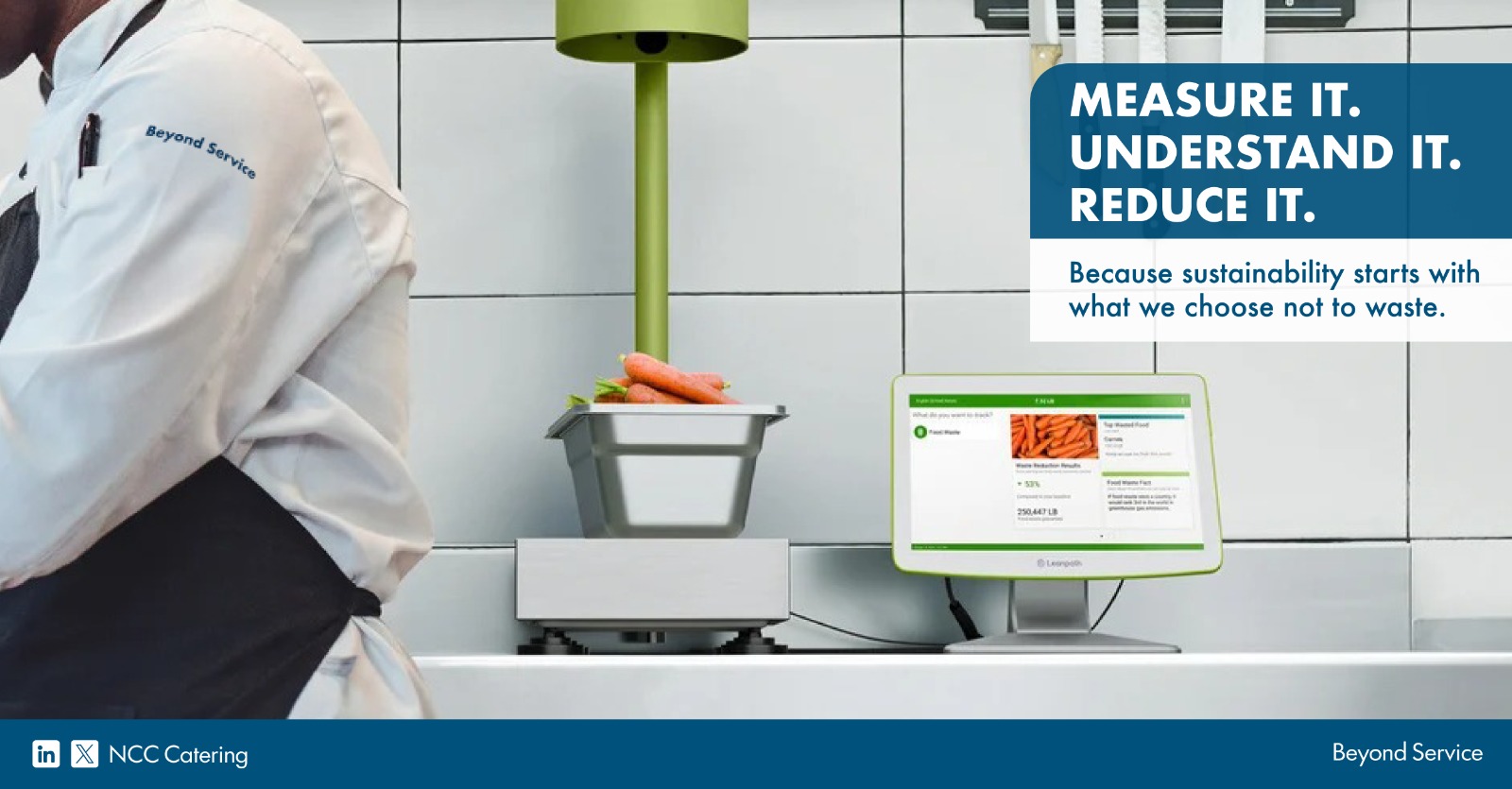
At NCC Holding, this commitment takes shape through Track to Zero — NCC Catering’s food waste management initiative powered by the Leanpath – an AI food waste tracking and analytics system developed in the UK. More than a waste tracking tool, Track to Zero is part of NCC’s wider approach toward sustainable catering, responsible operations, and smarter resource management across the UAE.

The idea behind the initiative is simple: you cannot reduce what you do not measure.
Understanding Where Food Waste Happens
Track to Zero helps NCC Catering monitor food waste across three important stages of operation.
1. Production Waste
The first phase focuses on waste created during food preparation and production. Something as simple as the way vegetables are cut or meat is prepared can significantly impact food waste levels. Different preparation methods can lead to unnecessary loss of ingredients, increased disposal, and higher operational costs. By tracking these details daily, kitchen teams gain better visibility into where waste happens and how preparation techniques can be improved. This allows chefs and production teams to make smarter decisions while maintaining food quality and consistency.
2. Uneaten Meals from Plates
The second phase tracks food left unfinished by diners. This stage provides valuable indicators about customer eating habits, portion sizes, and meal balance. In many buffet environments, guests often serve themselves more food than they can comfortably finish. Track to Zero helps teams understand these patterns and encourages a more mindful dining culture — one where people take what they need first and return for more if necessary instead of over-serving their plates. Small behavioral changes can make a major difference when scaled across large catering operations.
3. Buffet Leftovers
The third phase focuses on food remaining untouched at buffet stations. This type of data is especially important because it helps identify operational and menu related insights. For example:
- Was too much food prepared?
- Were portions incorrectly forecasted?
- Did guests avoid a certain dish?
- Did some menu items perform better than others?
When one dish remains untouched while others are consumed quickly, it becomes a valuable indicator for future menu planning, production forecasting, and customer preference analysis. Instead of relying on assumptions, NCC Catering uses real data to improve efficiency and reduce unnecessary waste.
Food Waste Is Bigger Than Food
Reducing food waste does more than lower disposal volumes.
Every meal prepared requires resources long before it reaches the plate. Water is used to clean vegetables, wash rice, prepare meat, sanitize equipment, and maintain kitchen operations. Energy is consumed during cooking, refrigeration, transportation, and production processes.
When food is wasted, these resources are wasted with it.
This is why food waste reduction is closely connected to global sustainability goals and environmental responsibility initiatives supported by the United Nations. Lower food waste contributes to reducing water consumption, minimizing carbon emissions, and supporting more sustainable food systems overall. For large-scale catering operations, even small reductions in waste can create a meaningful environmental impact over time.
Supporting the United Nations Sustainable Development Goals (SDGs)
Track to Zero supports broader sustainability efforts aligned with the United Nations Sustainable Development Goals (SDGs), particularly SDG 12: Responsible Consumption and Production, SDG 2: Zero Hunger, SDG 6: Clean Water and Sanitation, and SDG 13: Climate Action. SDG 12 focuses on reducing waste and improving resource efficiency through smarter production and responsible consumption practices — an area supported through real-time food waste tracking and improved operational forecasting. SDG 2 promotes more sustainable food systems by reducing avoidable food loss and encouraging more responsible food management practices. Mindful serving habits and reducing unnecessary waste can help preserve more untouched food, creating greater opportunities to support food donation efforts and reach more communities in need.
Supporting UAE Sustainability Goals
Track to Zero also aligns with the sustainability and food safety direction encouraged by Abu Dhabi Agriculture & Food Safety Authority (ADAFSA), supporting wider efforts toward responsible food management, sustainability awareness, and reducing unnecessary waste across the food sector in the UAE.
Creating Awareness Beyond the Kitchen
Track to Zero is not only about numbers and reports — it is also about awareness. The initiative encourages a stronger understanding of responsible consumption among kitchen teams, clients, and diners alike. It creates conversations around food value, sustainability, and everyday habits that people often overlook.
In high-volume catering environments, small daily actions matter:
- taking reasonable portions,
- improving forecasting,
- refining preparation methods,
- and serving food more responsibly.
Together, these actions contribute to a more sustainable operational model.
Supporting a Smarter Future for Catering
As the catering industry continues to evolve, sustainability is becoming a core operational priority rather than an optional initiative. Through Track to Zero, NCC Catering continues to invest in smarter food waste management practices that support operational excellence, environmental responsibility, and long-term sustainability goals across the UAE. Because reducing food waste is not simply about throwing away less food. It is about protecting resources, improving efficiency, supporting communities, and building a more responsible future for the next generation.